
How is whisky made?
Whisky (or whiskey) is a spirit that’s made all over the world. While every producer has their own way of doing things, there are lots of factors – from ingredients to equipment and process – that are similar wherever you go

The still house at Glenlivet distillery in Speyside
Whisky has a a long history. While we’re not certain where it originated – with theories mooting everywhere from England to Egypt – whisky in its modern form eventually arose in Scotland and Ireland. There are records mentioning the spirit being made in both countries stretching back into the 1400s, and it is with this pair of nations that our story starts. From there, we have many tales of emigration and immigration, export and import, with bottles, casks and people flung to the far reaches of the world, carrying the knowledge and promise of whisky with them.
Over the past six centuries, whisky has changed a lot, with distillers tweaking their recipes to use local ingredients and new technology as it has arrived. This has led to a great deal of variation, but there are still enough commonalities to create a broad definition of whisky. The general description that we use is “a distilled spirit made from grain and matured in a wooden container.”
How is whisky made?
Making this distilled, aged grain spirit requires the following steps:
- Preparing the grain
- Making the spirit – itself three processes:
- Mashing
- Fermenting
- Distilling
- Maturing the spirit
Grain
If a grain has the potential to make alcohol, then someone has probably used it to make whisky at some point. That said, some grains that are significantly more commonly used than others. These are:
- Barley
- Maize/corn
- Rye
- Wheat
You do also see oats as well as more specialist grains like spelt and buckwheat, but these are much rarer and generally used to bring in particular flavour profiles, or if more conventional grains aren’t available.
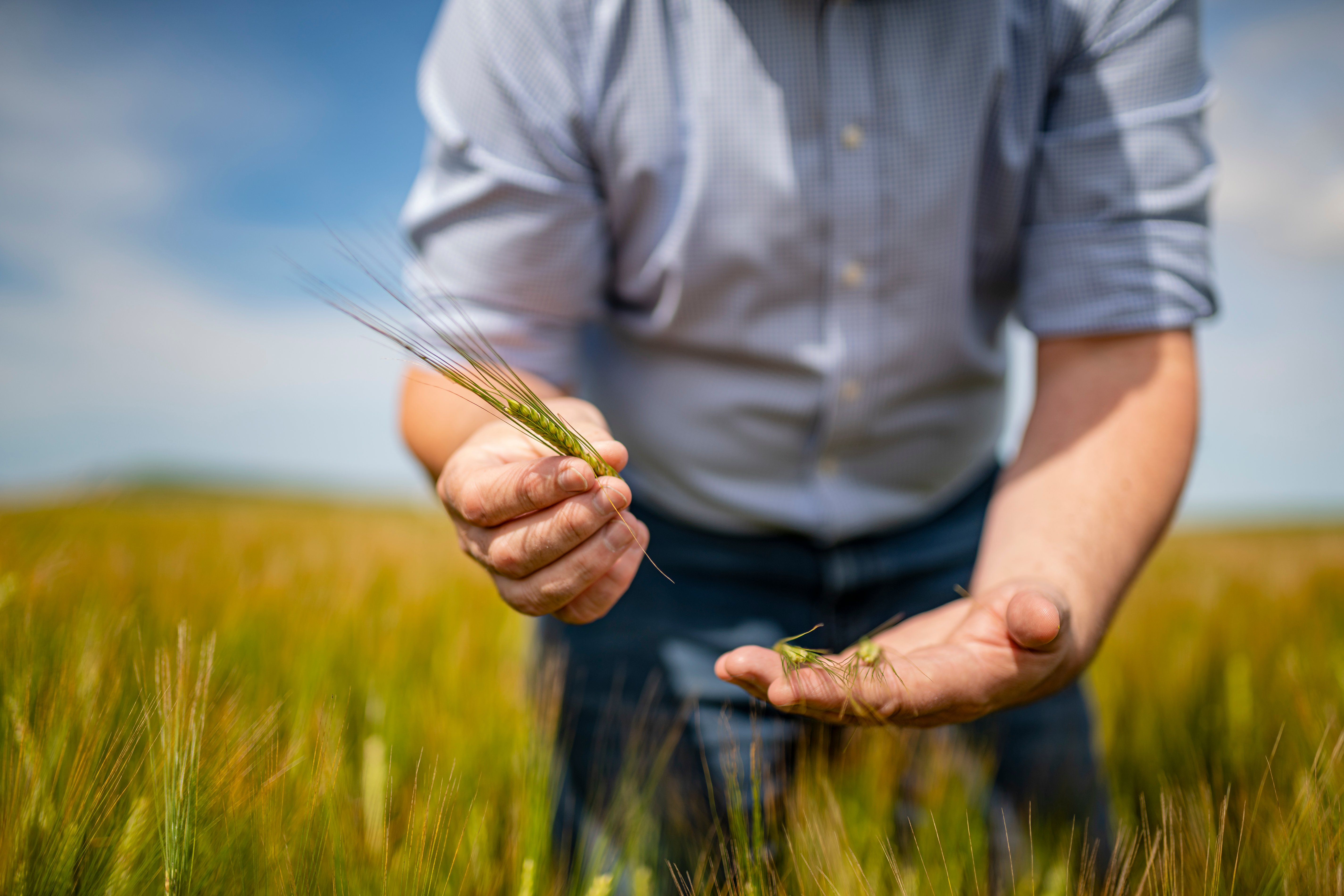
Once the grain has been selected, it must be processed. The most common way to process is malting, a means by which we can cause the grain to begin growing into a plant. Within each grain is a store of energy in the form of starch. For the grain to access this energy source it needs enzymes that convert this starch into sugars. Fortunately for us, these are the same sugars we need to create alcohol and the malting process releases enzymes. So, by using malted grain and the enzymes within, we are able to create the fermentable sugars we need to start the process of whisky making.
Mashing
The next step in the whisky making processes is turning our grain into a sugary liquid – this is called mashing. To do this, we mill the grain, turning it into ‘grist’. This grist can vary in consistency from a rough mixture to a very fine flour.
If the grain being used is not malted, then it will need to be cooked before we continue. This is done by mixing the milled grain with water in a vat and heating it up. This helps make the starch in the grain more easily convertible into sugar. To do that conversion we either need some malted barley or some other source of enzymes.
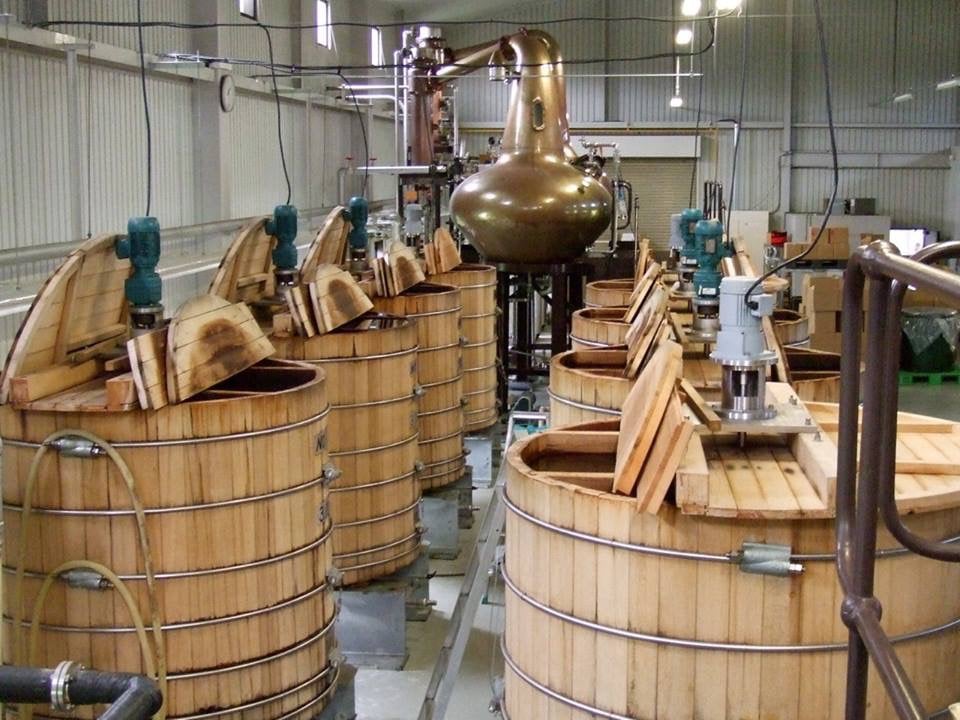
Now it’s time to mix our grain with hot water to start the process of mashing – having the enzymes convert starch into sugar and dissolving it all in water. This happens in a large vat often called a mash tun or conversion vessel, or in the cooking vats. This mash of water and grain will be left to steep until the desired level of sugar extraction is achieved. Sugar is not the only thing extracted from the grain, and everything else creates more potential for flavour in our final spirit. At this point, we have the option to filter the mash before it goes on to the next stage of the whisky-making process: fermentation.
Fermentation
Alcoholic fermentation is the process of using yeast to turn the sugars in our liquid into ethanol, the type of alcohol in spirits.
Yeast is a microorganism that eats sugar and produces ethanol, as well as carbon dioxide, heat and lots of other byproducts which can add flavour. Yeast is also used to make bread, with the carbon dioxide produced causing dough to rise.
In the case of whisky, we add yeast to our sugary liquid and leave it to work its magic, eating up the sugars and producing flavour and ethanol. This can take anything from a couple of days to more than a week, depending on the character and flavour of whisky that the producer wants to make. The result – often referred to as wash – is basically a beer. However, as the focus here isn’t on creating a drink that you’d want to enjoy straight from the fermentation tank, it generally doesn’t taste great. The next step of the whisky-making process is distillation, which refines our wash and selects many of the flavours we want in the finished product.
Distillation
In whisky making, distillation is where we choose the elements we want from our wash and get rid of the rest. We want as much of the ethanol as we can get, as well as specific flavours that are going to make our whisky taste good further down the line.
To do this, we use pieces of equipment called stills. There are a variety of different types of still used to make whisky, but they all work on the same principle: raising the temperature of our wash to extract the compounds we want for our whisky. Because the compounds in the wash boil at different temperatures, we are able to draw off desirable elements like ethanol and those responsible for flavour and aroma and leave everything else behind.
After selecting only the compounds we want, we are left with a concentrated spirit, usually between 70% and 95% alcohol by volume.
While it is flavoursome and aromatic, the spirit isn’t ready yet. Next comes the final stage of whisky-making: maturation.
Maturation
While some parts of the world let you call a spirit whisky even if it hasn’t been matured in a wooden container, most whisky is aged in wood. The maturation process serves a number of different purposes, all of which refine the flavour of our spirit and add new flavours.
Firstly, when you fill a wooden container with spirit, it will soak into the wood. This will dissolve flavour and colour compounds in the wood into the spirit. Over time, the wood will expand and contract, squeezing spirit out and sucking it back in again, allowing those flavours – and the colour – to mix with the rest of the spirit in the container.
The wooden containers we use to mature whisky are almost always casks made from oak. Oak is the most commonly used wood as it is found around the world, is easy to make casks from and gives pleasant flavours to the spirit as it matures. Some whiskies use wood other than oak in their production, and this can give very different results.
These casks vary in size from the very small (just a handful of litres) all the way up to the very large (generally not more than about 700 litres), and the size will have an effect on the flavour of the final spirit. Smaller casks have a greater ratio of surface area to volume, meaning that the spirit will have more wood contact than in a larger cask. This will give the flavour of the spirit more influence from the wood.
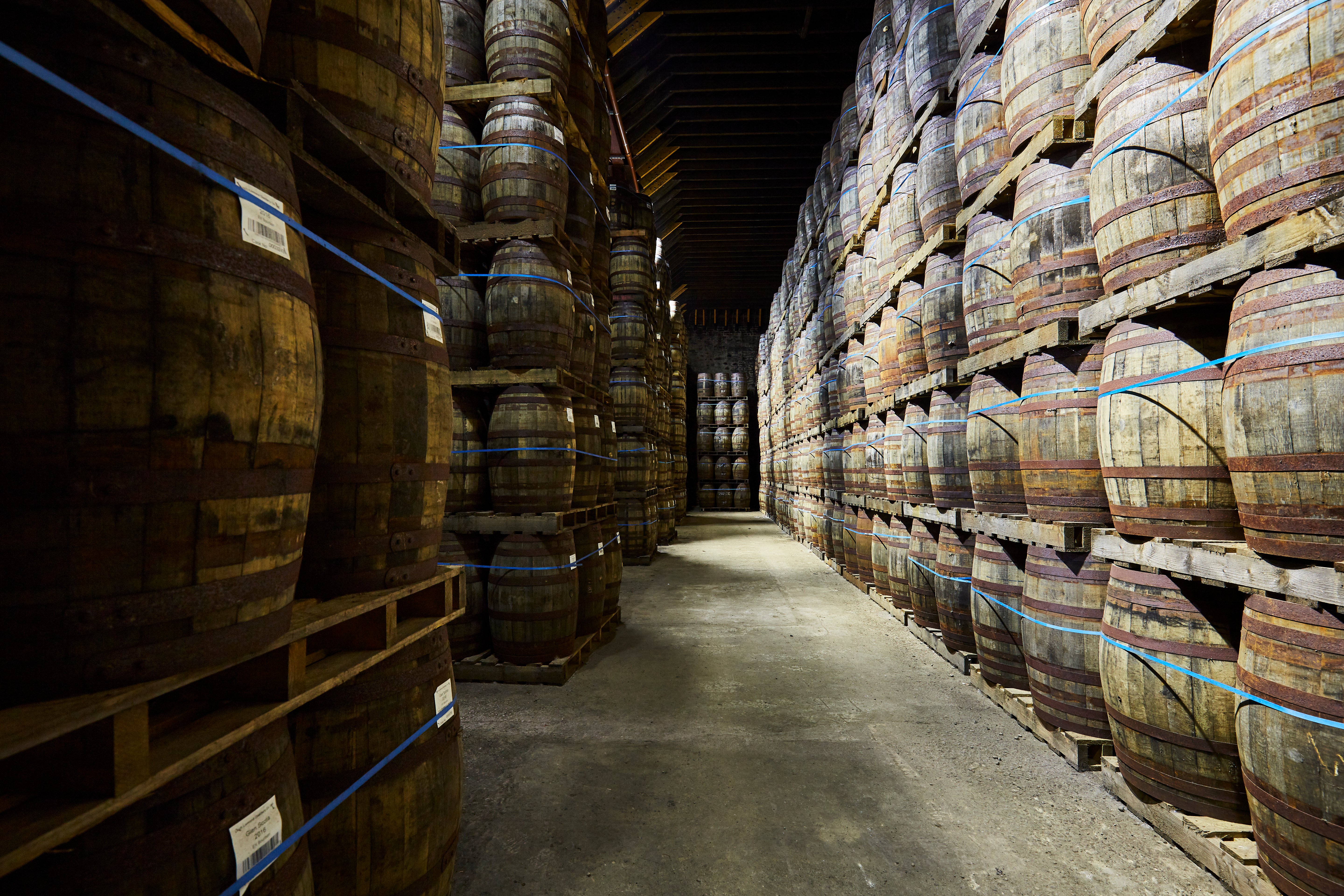
The wood is not the only thing that affects the flavour of the spirit. Casks are generally liquid-tight – if not, they leak – but they are not vapour-tight, which allows the spirit to slowly evaporate over the years. This evaporation will predominantly be water and ethanol, allowing the flavours in the cask to concentrate. Depending on whether more water or ethanol evaporates, the alcoholic strength of the liquid may go up or down.
Along with evaporation, the spirit will also gradually change due to chemical reactions happening within it. These are usually slow, and will create new flavours over time as well as changing and hiding others.
The amount of time we leave the spirit in the cask will influence the character of the finished whisky. The whisky is drawn from the cask once it has reached the point the whisky maker desires.
Final steps
There are other processes that happen once the whisky leaves the cask but it’s the initial processing of the grain, mashing, fermenting, distilling and maturing that create whisky. That whisky may go on to be blended with other whiskies, or refilled into another cask to mature again, but every bottle starts from these relatively simple beginnings.