Whisky auction shop

Category: Blog

Scotch vs Bourbon: What’s the Difference?

Scotch. Bourbon. Two of the world’s most famous whiskies. Each truly iconic. And with all the confusion surrounding their differences we’re diving into what sets one apart from the other.    Before we go on to explain the key differences between Scotch and Bourbon – and help you form a better picture of which might be more to your liking – it would be prudent to mention that Scotch whisky is made of many styles, the two most well-known of those being single malt and blended Scotch.  Rather than discuss both of those whisky styles, for the purposes of keeping this exercise on the simpler side, we’ll be focusing on single malt Scotch whisky in this article, being the most prestigious style from Scotland as well as the most comparable to bourbon, in its prestige. What Is Scotch Whisky? Single malt Scotch whisky – without the ‘e’ – is distilled at a single distillery using copper pot stills, and must be distilled, matured and bottled in Scotland. It has to be aged for a minimum of three years in an oak cask, with common cask types being ex-bourbon, sherry, wine and rum. It’s then legally bottled at 40% ABV or higher.  Historically, Scotch whisky has been divided into five regions, each with its own traditional character: Highlands (largest, most diverse), Lowlands (lighter, softer), Speyside (fruity, elegant), Islay (smoky, peated), Campbeltown (maritime, oily).  However, in today’s whisky landscape, borders have been blurred, and those traditional characters aren’t as reflective of the regions as they once were. You’re now as likely to find peated whiskies from Speyside as you are smoke-free whiskies from Islay, or more delicate and fruitier Campbeltown offerings. It’s for this very reason that we have set up Flavour Camps for the whisky in our range. Through these Flavour Camps you can easily explore the thousands of whiskies we have to offer by their most fundamental characteristics – malt and honey, rich fruit and spice, maritime and smoky, and so on – rather than by region. The flavour-first approach when it comes to classifying Scotch whisky is far more useful and appropriate than that of the geographic designation.  What Is Bourbon? Bourbon whiskey – with an ‘e’ – must be made from a recipe called a mash bill containing at least 51% corn and must be made in the United States. It’s aged in new, charred oak barrels with no minimum ageing period required (except if it’s ‘straight bourbon’ which then must be aged for a minimum of two years). Kentucky has become synonymous with bourbon over the years, but Bourbon can be and is made all over the USA.  Scotch vs Bourbon: The Key Differences Six key factors are at play when looking at the difference between Scotch and Bourbon, all laid out below: OriginScotch whisky can only come from Scotland Bourbon can only come from the USA GrainsSingle malt Scotch whisky uses only malted barley  Bourbon uses a corn-led mash bill BarrelsSingle malt Scotch whisky is predominantly aged in reused oak casks Bourbon must be aged in new, charred oak casks  ClimateScotch whisky is produced in a cooler, maritime climate which allows the whisky to develop over a longer time Bourbon is produced in an overall hotter climate creating bolder flavours in a shorter time Regulation FocusScotch is defined by its place of production, raw ingredients and traditional methods Bourbon is defined by its ingredients and the use of new charred oak casks How Do They Taste? Scotch A Scotch whisky flavour profile contains many a nuance, but very generally, you’ll find a Scotch is everything from light and delicate to bold and smoky. You’ll experience notes of smoke, peat, citrus, orchard fruit, dried fruit, malt and spice, depending on how it’s made, raw materials, and what type of cask it’s been aged in. Bourbon A Bourbon flavour profile is generally richer and sweeter, with the sweetness of the corn balanced by spice from rye or softness from wheat. You’ll encounter notes of vanilla, caramel, toffee, honey and baking spices, with a strong oak presence.  How They’re Made: Production & Regulations Scotch Single malt Scotch starts with malted barley, mashed, fermented, and distilled in pot stills. The shape of the still and how the spirit is distilled help define its character, while slow ageing in Scotland’s cool climate brings out layered and varied, complex flavours.  Bourbon Bourbon begins with cooked grains and is distilled to a low strength in column stills, producing a robust spirit. Seasonal temperature swings push it in and out of the wood of the new charred oak barrels, extracting vanilla, caramel, and spice to create the sweet, bold flavours Bourbon is famous for. Which Should You Choose? There’s no right or wrong when it comes to choosing between a Scotch and a Bourbon. Scotch will give you variety, breadth of flavours – smoky, malted, sherried, among many more – and an opportunity to explore whisky of lots of different styles. Bourbon provides sweet, bold flavours, with vanilla and caramel notes, and is ready to enjoy without as many years in the cask. Can You Use Scotch and Bourbon in Cocktails? Scotch Traditionally sipped neat or with a splash of water, Scotch also shines in classic cocktails, like the Rob Roy. Lighter styles work well in highballs, while smoky expressions add depth to modern serves.  Bourbon With its sweet, oaky notes, Bourbon can work well in mixed drinks but it’s perfect on its own. It stars in classics like Old Fashioneds, Manhattans and Mint Juleps, and pairs beautifully with sugar, bitters and citrus. So. Two iconic whiskies. But two very different styles. Which to pour into your glass? That ultimately depends on your personal flavour preference. But occasion can have a bearing on your choice, too, as well as whether you want your drink neat or mixed. One thing to be sure of, though – whether Scotch or Bourbon, neither will disappoint.
Laizhou distillery and the rise of Chinese whisky

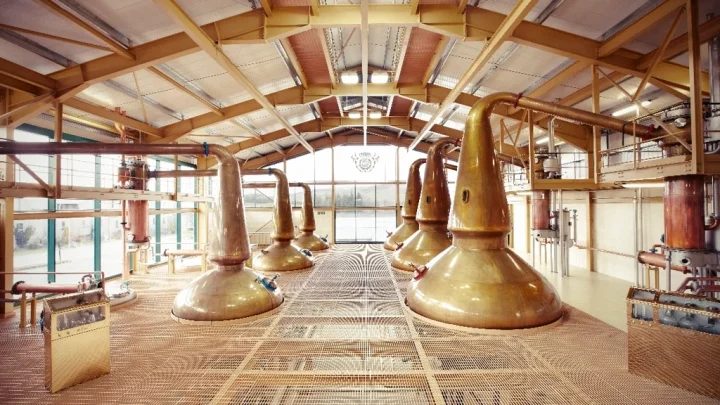
China is one of the most populous countries in the world but it has not been known for whisky drinking or production until more recently. While population rival India has been making and drinking whisky for years, China has only entered the fray in the past decade, but has grown rapidly: in 2023, domestic production exceeded whisky imports. While this has been a success story at home, Chinese producers are still not well known on the international market. That could be about to change, with a number of producers starting to export their whiskies and win awards on the global stage. In the vanguard, and leading the award tally, is Sichuan’s Laizhou.   The Source of Strong Aroma Baijiu Sichuan, in southwest China, is not new to making alcoholic drinks. The home of strong aroma baijiu, the most popular style of the country’s national spirit, the province has a centuries-long history of alcohol production. The area around Chengdu is dense with baijiu producers. Nearby Qionglai has a wide array of producers, from boutique distillers to gigantic, town-sized operations producing some of China’s best-known spirits. Hidden among the baijiu makers is Laizhou, a newer entry into China’s whisky arena, but one that is already making waves internationally. A model of the final plan for Laizhou. The distillery itself is in the middle at the top, on the banks of the river While only founded in 2021, the distillery was built with big ambitions, and the past few years have seen rapid growth. It opened its own cooperage in 2023 and a visitors centre and whisky museum in 2024. The plans include warehouse space for a million casks of whisky and distilling operations for brandy, plus apartments, a hotel, a spa and even a basketball court. Laizhou is a very different prospect to distilleries in other parts of the world. Laizhou Whisky On the whisky front, the comparatively tiny production area packs a lot into its space. There are both pot and column stills, producing both malt and grain whisky, with the latter key to the production of Laizhou’s most popular products: Blender 22 and Blender 66, blended Chinese whiskies focused on the home market. However, it’s the malt whisky which is now starting to make its way out into the wider world. Laizhou’s pot stills With eight pot stills of various shapes and sizes, and a capacity of about 6 million litres of pure alcohol per year, Laizhou is versatile when it comes to making whisky. The team, led by Heriot-Watt-educated distiller Hao Wu, are experimental with maturation. They use ex-bourbon, sherry, wine and tequila casks plus, in a world first, casks previously used for huangjiu (Chinese yellow wine). I was fortunate to visit the distillery while judging for the International Wine and Spirits Competition in late 2025. While there primarily to taste baijiu, we also had a wide range of Chinese whisky to consider. The whiskies were impressive, surpassing our expectations, with a handful of distilleries consistently hitting high scores. Chief among those was Laizhou, with its flagship single malt picking up a 95pt Gold Medal and its peated expression a 98pt Double Gold. Laizhou Finest Select Single Malt Whisky Laizhou Finest Select is the core of the distillery’s single malt whisky releases and, appropriately, the first of its whiskies that I tried. It’s very much up my street, with bright fruit at its core, and I was surprised when I saw the breakdown of the recipe – there’s a lot going on here. It’s a mixture of new oak, ex-bourbon and ex-PX sherry casks, which I expected, but there’s also some Chinese fortified wine casks in the mix, which I suspect explains some of the more exotically tinged sweetness. Nose: Freshly sliced sweet and sour apples, sugared almonds and buttered white toast. Gummi bears and wine gums sit in the middle, surrounded by fresh and candied orange and lemon peel. Baking spice and dried apricots develop. Palate: Zingy and sweet to start, with lemon zest and sour apples balanced by candied peel and butter toffee. Dark oak sits right at the back with cherries and sultanas. Spiced sponge cake builds through the middle, joined by fruity boiled sweets, grass, green leaves and red apple skin. Finish: Spiced apple sponge cake with candied lemon slices and a touch of youthful green wood. Laizhou Peated Bourbon Cask Single Malt Whisky I first tried the Laizhou Peated Bourbon Cask entirely blind during the IWSC judging session in China. It was an immediate hit, with my sample being put to one side to accompany my lunch, and one of the other judges asking me when we would find out what the whiskies were – he wanted to make sure to pick up a bottle before we left the country. Going back to it now that it’s got to the UK, it’s still a whisky that seems tailor-made for me: balanced peat, fruit and spice with more complexity than you might expect for its youthfulness. Nose: Soft, earthy peat smoke leads, followed by gummi-bear fruit, damp wood, fragrant grass and leaves, hints of mint chocolate, sultanas, singed toffee and bright, sharp apples: freshly sliced, barbecued and baked with cinnamon and brown sugar. Palate: Fresh and briny with a touch of sea breeze and crashing-wave ozone leading to sharp green apples, just-ripe pears and apple boiled sweets. Rhubarb and Custard sweets develop, along with lemon drizzle cake, bracken and butter mints. Bright peat smoke is ever present: burning grass and pine. Finish: Sweet pine and apple linger, along with fragrant smoke. The Future of Chinese Whisky While Chinese distillers don’t really need to look outside of their own country for eager fans to drink their whisky, we’re fortunate that some, such as Laizhou, are sending their releases further afield. That way we can try their spirits without travelling around the world. We’re very pleased to announce that the Laizhou range will shortly be available from The Whisky Exchange and we look forward to seeing it grow…

A guide to single malt whisky

Discover the world of single malt, the most prestigious style of whisky in the world, refined for centuries from Scotland to Japan, the USA and more Arguably the most prestigious style of whisky, malt whisky must be made only from fermented barley malt distilled using copper pot stills. To be called a single malt, it must also originate at just one distillery. The rise of single malt has seen distilleries around the world become household names, such as Glenfiddich and the Macallan in Scotland and Yamazaki in Japan. The history of malt whisky Throughout history, human beings have tended to make alcohol from whatever is available to them. In warmer climes this might mean fermenting grapes or sugarcane, but in Europe people have long since used grain. There’s evidence of tilled fields and brewing in Ireland and the Scottish islands going back at least 5,000 years. While early fermented drinks in this part of the world were made with a variety of cereals, malt quickly distinguished itself as the grain of choice. Malt lacks the proteins to make good risen bread, it might make a sort of porridge in a pinch, but it is ideal for brewing. Bowmore distillery in the early 1900s In the 12th century, when knowledge of distilling arrived in Ireland via a network of holy orders that spanned medieval Europe, the first grain spirits emerged soon after. It would be several hundred years before the advent of the modern whisky industry, first in Ireland and then in Scotland. But by the time the first true commercial distilleries were registered in Dublin and Cork, the role of malt in making good spirit was well understood. Mixed mashes of grain continued to be used in Ireland and Scotland – most notably leading to the divergent evolution of Irish pot still whiskey in the 18th century – but by the time Scots distilling was legitimised under the excise act of 1823, malt whisky was the dominant form. It would be almost a century before the style was defined in law, but the notion of single malt was slowly taking shape. How is malt whisky made? At every stage in production, distillers make decisions that shape their malt whisky. There’s the variety of barley to consider, then the conditions under which it’s malted – a process by which the grain is soaked and warmed until the starches within it are converted into fermentable sugars. The way the barley is dried (with hot air or, more traditionally, by burning peat), milled and fermented must also be considered. The strain of yeast used and the length of fermentation can make the difference between a spirit that’s nutty and spicy and one that’s fruity and delicate.  Once we have a wash of fermented barley (beer, essentially) it is twice distilled to produce clear, aromatic new make spirit. The shape and size of the still, as well as choices made during distillation, can capture and concentrate certain flavours better. Each of these variables will shape the character of spirit. By fine tuning every part of the process to suit their needs, producers are able to create a distinct style and flavour profile – what’s known in the world of whisky as ‘distillery character’. Next, the spirit is filled into oak casks for ageing. In Scotland, this will usually be an American oak barrel previously used to mature bourbon, although sherry, port and various other wine and spirit casks are used as well. Around the world, regulations can be less strict, allowing for malt whisky to be matured in a wider range of casks including those made from wood other than oak. A cask’s size, composition and previous contents will greatly influence a spirit’s colour and flavour as it slowly becomes mature whisky. Traditional floor malting at Bowmore In Scotland and most other whisky-producing countries, after three years in cask, the spirit can be legally considered malt whisky. Unless it is specifically marketed as a being from a single cask, single malt whisky will generally comprise multiple casks from a distillery’s warehouses, carefully vatted together to achieve a particular style or flavour profile. Some producers will also ‘finish’ their whisky in one or more different casks after its initial maturation to add more layers of flavour. But the choices available when making single malt don’t end there: before bottling, producers will decide whether to introduce water to their whisky to adjust the ABV. They can also add caramel colouring for aesthetics or consistency, if desired. Single malt may also be chill-filtered, a common method of removing fatty acids and oily compounds that can form a hazy appearance in the finished product. Each of these decisions contributes to the experience you’ll have drinking a particular single malt whisky. The process is so complex and contains so much room for variation, that malt whisky can taste like almost anything, from tropical fruits and vanilla to smoke meats and beach bonfires. With this great variety, it’s no wonder that single malt resonates with so many of us around the world. But what may be surprising, is that it took centuries of distilling for the concept of single malt to be properly defined.  Single malt whisky in Scotland In the 19th century, Scotch whisky distilleries were supplying casks to hotels, clubs and private residences – early instances of malt whisky from a single distillery – but the majority of their business was with grocers, vintners and tea merchants. These traders became the first blenders, buying and brokering casks that they could vat together to create a consistent, quality product. Mr Haig, Mr Walker, Mr Dewar and others whose names are still famous today rose to prominence thereafter. The arrival of the column still, and with it cheap grain whiskies, allowed for the creation of modern blends that turned Scotch into a true international commodity. The term ‘single malt’ wasn’t used at this time. Pure malt, straight malt or ‘self whiskies’ were bottled in the late 19th and early…

Whisky vs whiskey: which is correct?

The complex history of early distilling in Scotland and Ireland, and why a simple question of spelling might not be as simple to answer as it seems   This seemingly small difference carries an emotional weight for many people, as the spelling ‘whisky’ is strongly associated with Scotland, while ‘whiskey’ is more commonly used in Ireland and the United States. As such, asking which spelling is correct can start to rhyme with the question ‘which of these countries produces the best whiskies?’ Here at The Whisky Exchange, we normally spell it without the e because we were founded in the UK and started out primarily selling Scotch whisky. However, we’ve always championed whisky-making around the world, and we’ve never had a problem with using the ‘e’ spelling where producers prefer it. Whether you’re dealing with a whiskey or a whisky, it’s all aged spirit made from grain at the end of the day. But, this does still leave us with the question of why different spellings are used in different places. Ireland, Scotland and the origins of modern whisky We’ll never truly know where the first whisky/whiskey as we know it today was made, but we can say for sure that distilling likely arrived in Ireland first. In the 13th century, the so-called island of saints and scholars was home to a high concentration of monasteries and other holy sites that served as centres of science and learning. These formed part of a network of Catholic orders that stretched across Europe and allowed Irish monks to travel to France, Spain, Italy and beyond. At some point during this time, alembic distillation – which had originated in the Islamic world – reached Ireland with the advent of distilled alcohol following shortly after. What they were making at that time wasn’t yet whisky or whiskey and was commonly known to speakers of Celtic languages as some form of the term ‘uisgea beatha’ – the water of life. Old Midleton distillery began making Irish whiskey in 1825 The migration of peoples between Ireland and Scotland meant that distilled beverages subsequently became a part of life throughout the region. The shaky legal status of distilling in Scotland during this period, and quite possibly the head start enjoyed by Irish distillers, meant that Ireland had developed a modern concept of whisky and an international reputation for distilling by the late 18th century. So, as we can say with some certainty that Ireland had the first modern whisky industry, we can probably decide the ‘e’ spelling is older and therefore more correct, right? Well unfortunately, things are not that simple. In the beginning, there was whiskey Some sources will tell you that Irish whiskey is always and was always spelled with an ‘e’ while Scotch whisky is and was always without it. It’s also commonly said that in Japan they use the Scottish spelling and in the United States they favour whiskey over whisky. However, there are plenty of examples that prove this wrong. Delve into the history of Scotch whisky and you’ll find that while the e-less spelling was fairly consistent, there’s also plenty of documentation that refers to ‘whiskey’ being made in the Highlands. Proof at least that there wasn’t always such a crisp divide. Across the Irish Sea, you’ll also find old advertisements that proudly promote ‘whisky’ including many from brands that changed their tune at some point in the 20th century. A 1902 advertisement for Dunville’s Irish ‘whisky’ Modern Irish distillery Blackwater favours ‘whisky’. In Japan, they mostly follow the Scots way of doing things, but brewing and distilling giant Kirin markets grain whiskey from Fuji Gotemba distillery. In the USA, there’s no shortage of whiskey being made but also some big brands that have always spelt it whisky and show no intention of changing things – Maker’s Mark in Kentucky and George Dickel in Tennessee to name but two. All of this suggests that this is a matter of regional variation, heritage and personal preference rather than a case of who is right or wrong. We’re happy to respect whichever spelling a producer uses when stocking and writing about their product. But as we said at the beginning of all this, whether it’s whiskey or whisky in your glass, we think it’s probably all good.

How is whisky made?

How is whisky made?  WhiskyWorld whiskyAmerican whiskeySingle malt whiskyScotch whiskyIrish whiskeyBlended whiskyTennessee whiskey Whisky (or whiskey) is a spirit that’s made all over the world. While every producer has their own way of doing things, there are lots of factors – from ingredients to equipment and process – that are similar wherever you go The still house at Glenlivet distillery in Speyside Whisky has a a long history. While we’re not certain where it originated – with theories mooting everywhere from England to Egypt – whisky in its modern form eventually arose in Scotland and Ireland. There are records mentioning the spirit being made in both countries stretching back into the 1400s, and it is with this pair of nations that our story starts. From there, we have many tales of emigration and immigration, export and import, with bottles, casks and people flung to the far reaches of the world, carrying the knowledge and promise of whisky with them. Over the past six centuries, whisky has changed a lot, with distillers tweaking their recipes to use local ingredients and new technology as it has arrived. This has led to a great deal of variation, but there are still enough commonalities to create a broad definition of whisky. The general description that we use is “a distilled spirit made from grain and matured in a wooden container.” How is whisky made? Making this distilled, aged grain spirit requires the following steps: Preparing the grain Making the spirit – itself three processes: Mashing Fermenting Distilling Maturing the spirit Grain If a grain has the potential to make alcohol, then someone has probably used it to make whisky at some point. That said, some grains that are significantly more commonly used than others. These are: Barley Maize/corn Rye Wheat You do also see oats as well as more specialist grains like spelt and buckwheat, but these are much rarer and generally used to bring in particular flavour profiles, or if more conventional grains aren’t available. Barley grown for Kilchoman distillery on the island of Islay Once the grain has been selected, it must be processed. The most common way to process is malting, a means by which we can cause the grain to begin growing into a plant. Within each grain is a store of energy in the form of starch. For the grain to access this energy source it needs enzymes that convert this starch into sugars. Fortunately for us, these are the same sugars we need to create alcohol and the malting process releases enzymes. So, by using malted grain and the enzymes within, we are able to create the fermentable sugars we need to start the process of whisky making. Mashing The next step in the whisky making processes is turning our grain into a sugary liquid – this is called mashing. To do this, we mill the grain, turning it into ‘grist’. This grist can vary in consistency from a rough mixture to a very fine flour. If the grain being used is not malted, then it will need to be cooked before we continue. This is done by mixing the milled grain with water in a vat and heating it up. This helps make the starch in the grain more easily convertible into sugar. To do that conversion we either need some malted barley or some other source of enzymes. Now it’s time to mix our grain with hot water to start the process of mashing – having the enzymes convert starch into sugar and dissolving it all in water. This happens in a large vat often called a mash tun or conversion vessel, or in the cooking vats. This mash of water and grain will be left to steep until the desired level of sugar extraction is achieved. Sugar is not the only thing extracted from the grain, and everything else creates more potential for flavour in our final spirit. At this point, we have the option to filter the mash before it goes on to the next stage of the whisky-making process: fermentation. Fermentation Alcoholic fermentation is the process of using yeast to turn the sugars in our liquid into ethanol, the type of alcohol in spirits. Yeast is a microorganism that eats sugar and produces ethanol, as well as carbon dioxide, heat and lots of other byproducts which can add flavour. Yeast is also used to make bread, with the carbon dioxide produced causing dough to rise. In the case of whisky, we add yeast to our sugary liquid and leave it to work its magic, eating up the sugars and producing flavour and ethanol. This can take anything from a couple of days to more than a week, depending on the character and flavour of whisky that the producer wants to make. The result – often referred to as wash – is basically a beer. However, as the focus here isn’t on creating a drink that you’d want to enjoy straight from the fermentation tank, it generally doesn’t taste great. The next step of the whisky-making process is distillation, which refines our wash and selects many of the flavours we want in the finished product. Washbacks for fermenting at Chichibu distillery in Japan Distillation In whisky making, distillation is where we choose the elements we want from our wash and get rid of the rest. We want as much of the ethanol as we can get, as well as specific flavours that are going to make our whisky taste good further down the line. To do this, we use pieces of equipment called stills. There are a variety of different types of still used to make whisky, but they all work on the same principle: raising the temperature of our wash to extract the compounds we want for our whisky. Because the compounds in the wash boil at different temperatures, we are able to draw off desirable elements like ethanol and those responsible for flavour and aroma and leave everything else behind. After selecting…